
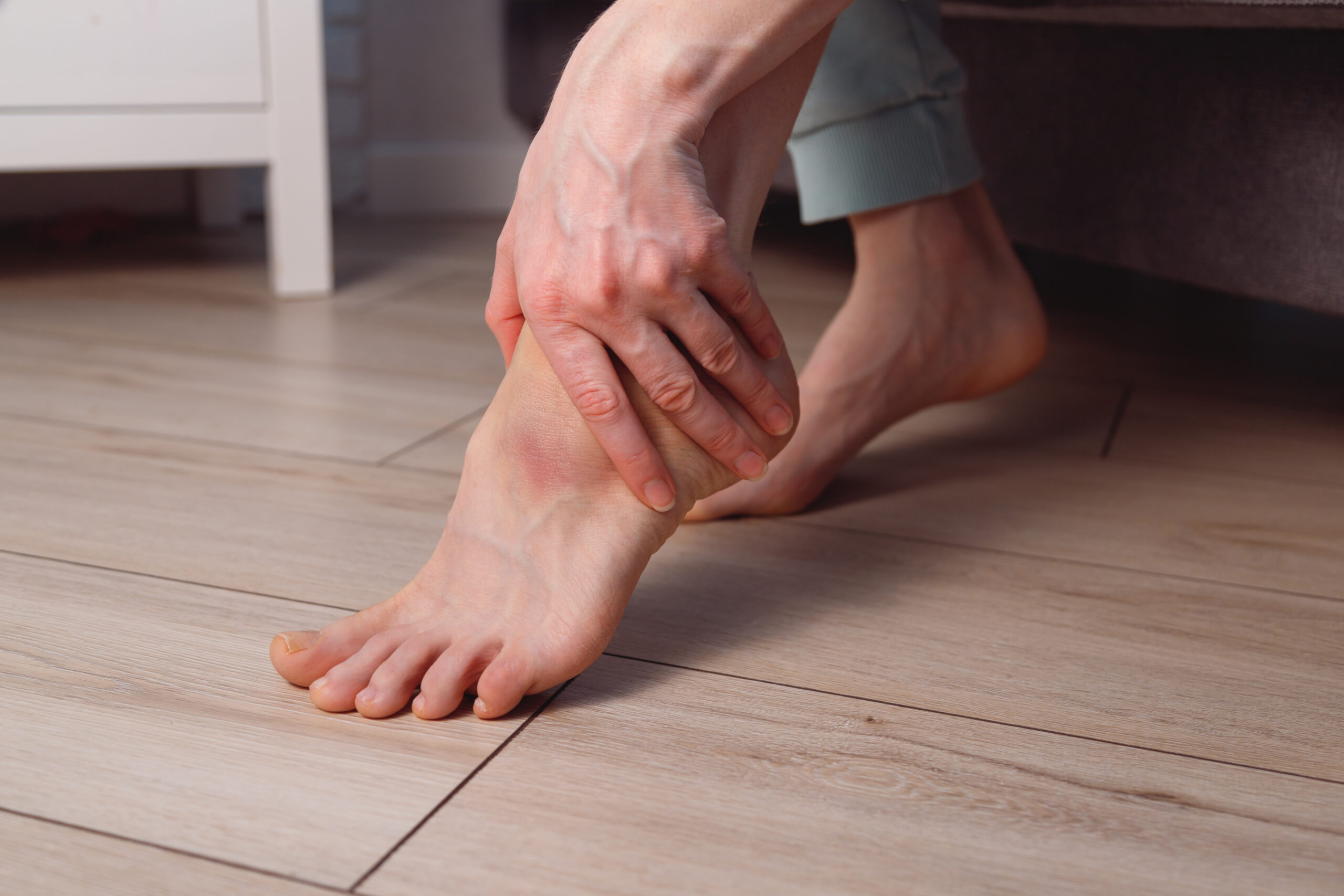

An ankle sprain is one of the most common musculoskeletal injuries in the UK. 302,000 ankle sprains are seen in UK Accident and Emergency departments each year, and lateral sprains account for 85% of all cases. Most people recover well with the right early management. Some do not, and that is where things get more complicated.
Treatment depends on how severe the sprain is, how quickly it is assessed, and whether the right rehabilitation follows. This guide covers what ankle sprain treatment actually involves, from the day of injury through to return to sport, and explains when a sprain stops being a simple injury and becomes something that needs specialist input.
What Happens to the Ankle During a Sprain
Before getting into treatment, it helps to understand what is actually injured. The ankle joint is held together by several ligaments. The anterior talofibular ligament, or ATFL, is the weakest of the lateral ligament complex and the most commonly injured structure in an ankle sprain. The calcaneofibular ligament (CFL) is injured less often. The posterior talofibular ligament (PTFL) is rarely torn except in the most severe cases.
When the ankle rolls inward, these ligaments are forced beyond their normal range. Depending on how far, the result is a stretch, a partial tear, or a complete rupture.
The Three Grades of Ankle Sprain
Ankle sprains are graded by severity. Knowing the grade helps determine how long recovery takes and what treatment is needed.
- Grade 1 (mild): At least one lateral ligament is overstretched. There is mild swelling, tenderness, and pain. The ankle remains stable, and weight-bearing is possible, though uncomfortable.
- Grade 2 (moderate): At least one ligament is partially torn. Swelling, bruising, and pain are more significant. The ankle feels less stable, and weight-bearing is painful.
- Grade 3 (severe): At least one ligament is completely ruptured. Severe swelling, bruising, and instability are present. Weight-bearing is very difficult or not possible at all.
An ultrasound or MRI scan can accurately grade the sprain when the clinical picture is unclear. This matters because Grade 2 and Grade 3 injuries need more structured management than mild sprains.
First-Line Treatment for an Ankle Sprain
The immediate goal after an ankle sprain is to reduce swelling, protect the joint, and get the ankle moving again as quickly and safely as possible. The approach has shifted in recent years from the older RICE method toward a more evidence-based framework.
The PEACE and LOVE Framework
The PEACE and LOVE model was published in the British Journal of Sports Medicine as an update to RICE. This framework reflects current evidence more closely and is now widely used in clinical practice. Here is what each part means in practice.
PEACE covers the first few days:
- Protect: Limit movement and weight-bearing for one to three days to avoid aggravating the injury.
- Elevate: Keep the ankle above heart level as much as possible to reduce swelling.
- Avoid anti-inflammatories: Inflammation is part of the healing process. Suppressing it with medication in the early days may slow tissue repair.
- Compress: Use a bandage or brace to limit swelling and provide support.
- Educate: Most sprains heal without scans, injections, or prolonged rest.
LOVE follows in the days and weeks after:
- Load: Start gentle, pain-free movement and weight-bearing as soon as it is tolerable.
- Optimism: A positive outlook genuinely improves recovery outcomes. Fear of re-injury slows rehabilitation.
- Vascularisation: Light cardiovascular activity, such as water aerobics or cycling, improves blood flow to the injured area without stressing the ligament.
- Exercise: Structured rehabilitation covering strength, balance, and proprioception reduces re-injury risk significantly.
What About Ice?
Ice is not included in PEACE and LOVE. Research suggests that ice reduces inflammation, which the body uses as part of the healing process. For most ankle sprains, ice can still provide short-term pain relief, but applying it for extended periods in the first 72 hours to stop all swelling is not recommended.
Rehabilitation After an Ankle Sprain
Rehabilitation is where most of the actual recovery happens. Getting this right reduces the risk of re-injury and prevents the ankle from becoming chronically unstable. Here is how structured rehabilitation progresses after a sprain.
Phase One: Early Mobility
This phase begins within the first few days, once the worst of the swelling has settled. The aim is to restore a pain-free range of motion without loading the damaged ligaments too heavily. Gentle ankle circles, alphabet exercises with the foot, and toe movements all help keep the joint mobile while the ligament begins to heal.
Phase Two: Strength and Proprioception
Proprioception is the ankle’s ability to sense its own position in space. Up to 70% of people who sustain a lateral ankle sprain develop chronic ankle instability, and poor proprioception after the initial injury is a key reason why. Balance board exercises, single-leg standing, and resistance band work all rebuild this sense of position and reduce re-injury risk.
Phase Three: Return to Activity
This phase reintroduces the movements that caused the original injury, such as cutting, jumping, and running on uneven surfaces. Return to full sport is guided by how well the ankle performs during these tests rather than by a fixed number of weeks. A Grade 1 sprain may allow return to sport within one to two weeks. Grade 2 sprains often take four to six weeks. Grade 3 sprains can take three months or more.

Mr Francesc Malagelada
Mr Francesc Malagelada is a highly respected Consultant Trauma and Orthopaedic Surgeon based at the Royal London Hospital, the largest Trauma Centre in the UK. He has a special interest in foot and ankle surgery and treats common conditions such as bunions, sports injuries, ligament damage, tendon issues, as well as complex conditions that require reconstruction surgery. Mr Malagelada takes a patient-centric approach to care and offers both surgical and non-surgical options to adapt to each patient’s lifestyle.
When Conservative Treatment Is Not Enough
Most ankle sprains heal with rehabilitation alone. Even a complete Grade 3 ligament rupture can heal without surgery if it is managed and rehabilitated appropriately. However, some patients do not recover as expected.
Signs that a sprain may need specialist assessment include:
- Persistent pain or swelling beyond six to eight weeks despite rehabilitation
- A feeling of the ankle giving way during daily activities, not just sports
- Repeated sprains on the same ankle
- Difficulty completing the return-to-sport phase of rehabilitation
These are signs of possible chronic ankle instability (CAI). Approximately 20% of acute ankle sprains progress to chronic lateral ankle instability requiring surgical intervention. Left unaddressed, CAI can lead to progressive joint damage over time.
When Surgery Is Considered for an Ankle Sprain
Surgery is reserved for patients who have completed a full course of physiotherapy and still experience significant instability in daily life or sport. It is not a first-line option. A systematic review of clinical practice guidelines found that surgery carries a very low grade of recommendation for acute sprains, but is strongly recommended after chronic ligament injury that has failed conservative management.
The All-inside Arthroscopic and Brostrom Procedures for Chronic Ankle Instability
The Brostrom procedure, specifically the modified Brostrom-Gould technique, has been performed since the 1950s for chronic lateral ankle instability worldwide, although the shift is now changing to less invasive techniques, and the All-inside Arthroscopic technique has become the gold standard. The procedure tightens and reattaches the damaged lateral ligaments, restoring stability to the ankle joint while using arthroscopy (keyhole surgery).
Mr Francesc Malagelada performs lateral ligament reconstruction at Welbeck London, King Edward VII and Cromwell Hospital using minimally invasive and arthroscopic approaches where appropriate. You can read more about ankle sprain treatment and surgical options on the website. A minimally invasive percutaneous Brostrom study of 54 consecutive patients found an overall satisfaction rate of 98.1% at follow-up, with all patients returning to their previous activity level.
The Brostrom procedure, specifically the modified Brostrom-Gould technique, has been performed since the 1950s for chronic lateral ankle instability. It involves an open incision over the lateral ankle to tighten and reattach the damaged anterior talofibular and calcaneofibular ligaments, restoring stability to the joint. For decades, the modified Brostrom-Gould has been considered the gold-standard treatment for failed conservative management of chronic lateral ankle instability.
The All-Inside Arthroscopic Procedure
More recently, the shift has been toward less invasive techniques, and the all-inside arthroscopic procedure is now emerging as the new gold standard for chronic lateral ankle instability. Rather than an open incision, the ligaments are accessed and repaired through two small arthroscopic portals using keyhole instruments and knotless suture anchors. The ankle joint can be inspected at the same time for any additional intra-articular injuries that are often missed on imaging.
A 2025 editorial in Arthroscopy: The Journal of Arthroscopic & Related Surgery described arthroscopic all-inside ligament repair as a minimally invasive procedure delivering excellent results for chronic ankle instability. A 5-year comparative study co-authored by Mr Malagelada (Guelfi et al., Knee Surg Sports Traumatol Arthrosc 2023) found that arthroscopic all-inside repair produces similar or superior clinical outcomes to open repair at 5-year follow-up.
Mr Francesc Malagelada performs lateral ligament reconstruction at Welbeck London, King Edward VII and Cromwell Hospital using minimally invasive and arthroscopic approaches where appropriate. You can read more about ankle sprain treatment and surgical options on the website, and for further patient resources on recovery, visit sprainedankle.co.uk. A minimally invasive percutaneous Brostrom study of 54 consecutive patients found an overall satisfaction rate of 98.1% at follow-up, with all patients returning to their previous activity level.
When to See a Specialist for an Ankle Sprain
There is always a benefit in seeing a specialist so that serious injuries are not missed and to assess the extent and grade of the injury. The following situations do warrant specialist review:
- The ankle does not improve after six to eight weeks of structured rehabilitation
- You are unable to return to sport due to ongoing instability
- You have sustained multiple sprains on the same ankle in a short period
- There is significant bruising, deformity, or inability to weight-bear at the time of injury
- You are concerned that a fracture may be present alongside the sprain
Read more about who should see a foot and ankle specialist and when a GP referral is or is not needed.
Final Thoughts
An ankle sprain ranges from a minor inconvenience to a significant injury that can affect long-term joint health if it is not managed properly. Most sprains recover well with early protection, progressive rehabilitation, and patience through the strength and proprioception phases. The cases that do not recover need specialist assessment and potential surgery to rule out chronic instability before joint damage sets in.
Mr Francesc Malagelada specialises in ankle sprains, chronic ankle instability, and lateral ligament reconstruction at Welbeck London, King Edward VII and Cromwell Hospitals. Whether you have a recent sprain that is painful or a long-standing ankle that keeps giving way, an assessment can give you a clear picture of what is happening and what the right next step is.
If you are looking for a trusted ankle sprain specialist, call us at 020 8629 0932 or fill out our contact form to get started. No GP referral is required, and both self-pay and insured patients are welcome. Video consultations are also available.
Frequently Asked Questions
How Long Does an Ankle Sprain Take to Heal?
A Grade 1 sprain typically heals within one to two weeks. Grade 2 sprains take four to six weeks. Grade 3 sprains with complete ligament rupture can take three months or longer, particularly when full rehabilitation is needed before return to sport.
Should I Go to A&E After a Sprained Ankle?
Go to A&E or urgent care if you cannot put any weight on the foot at all, if the ankle looks deformed, if there is significant bruising and swelling immediately after the injury, or if you heard a crack at the time of injury. These signs may indicate a fracture alongside the sprain. We do offer same-day appointments in cases where these concerns arise.
Is It Better to Rest or Move an Ankle Sprain?
Early gentle movement produces better outcomes than prolonged rest. The PEACE and LOVE framework recommends protecting the ankle for one to three days and then beginning pain-free loading and movement as soon as it is tolerable. Immobilising the ankle for too long increases stiffness and slows recovery.
What Is Chronic Ankle Instability?
Chronic ankle instability develops when the lateral ligaments do not heal fully after a sprain. The ankle repeatedly gives way, particularly on uneven surfaces or during sport. Up to 70% of people who sustain a lateral ankle sprain may develop chronic instability if the initial injury is not properly rehabilitated.
Do I Need an MRI for an Ankle Sprain?
Most ankle sprains do not need an MRI in the first instance. An MRI is useful when the clinical picture is unclear, when recovery is not progressing as expected, or when an osteochondral defect, peroneal tendon injury, or other associated injury is suspected alongside the sprain.
Can a Grade 3 Ankle Sprain Heal Without Surgery?
Yes. Even a complete ligament rupture can heal without surgery if the ankle is protected and rehabilitated appropriately. Surgery is only considered when conservative management has failed, and significant instability remains in daily life or sport after a full course of physiotherapy.
What Is the Brostrom Procedure?
The Brostrom procedure is a surgical repair of the lateral ankle ligaments performed for chronic ankle instability. The modified Brostrom-Gould technique is the gold standard for this condition worldwide. It tightens and reattaches the damaged ligaments, restoring stability to the ankle. It can be performed as an open or minimally invasive arthroscopic procedure.
What Is the All-Inside Arthroscopic Procedure?
The all-inside arthroscopic procedure is a minimally invasive (keyhole) repair of the lateral ankle ligaments for chronic ankle instability. The surgeon works through two small portals using knotless suture anchors to reattach the damaged ligaments, while also inspecting the joint for any cartilage or impingement injuries at the same time. A 2023 study co-authored by Mr Malagelada found outcomes are similar to or better than traditional open Brostrom repair, with smaller scars and a faster return to activity.
When Can I Return to Sport After an Ankle Sprain?
Return to sport is based on function, not just time. The ankle needs to demonstrate adequate strength, balance, and the ability to perform sport-specific movements before full return is safe. Grade 1 sprains may allow return within one to two weeks. More severe sprains need four to twelve weeks of rehabilitation before return is appropriate.
What Exercises Help After an Ankle Sprain?
Recovery begins with gentle exercises aimed at restoring ankle mobility, such as ankle circles and light stretches. As healing progresses, strengthening routines like calf raises and resistance band exercises are introduced. The final and most crucial stage focuses on balance and proprioception – practices like single-leg stands and wobble board training that help prevent future injuries.
What Happens If an Ankle Sprain Is Left Untreated?
An untreated ankle sprain, particularly a Grade 2 or 3 injury, significantly increases the risk of chronic ankle instability. Ankle sprains are often undertreated, resulting in chronic pain, muscular weakness, and instability. Long-term, repeated instability can lead to joint damage and post-traumatic osteoarthritis.