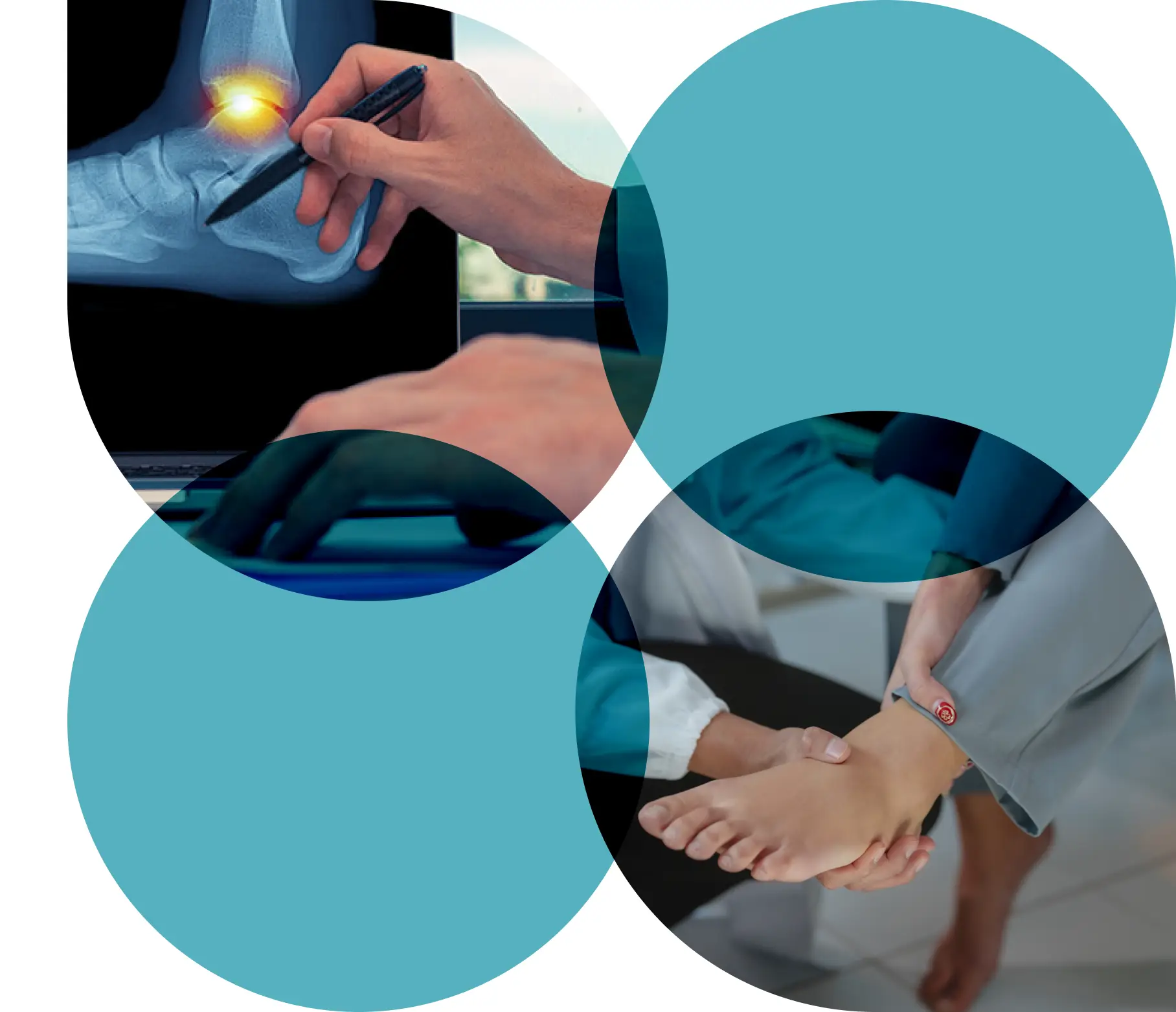
Heel pain that's worst in your first steps of the morning is the textbook sign of plantar fasciitis. Most cases settle with the right plan - but only if the diagnosis is right. Mr Francesc Malagelada is a Consultant Foot and Ankle Surgeon with a PhD in minimally invasive surgery and a 4.98 / 5 rating from 177 verified Doctify reviews. He'll examine your foot, confirm what's actually causing the pain, and start you on the least invasive treatment likely to work.
Understanding Your Heel Pain
Plantar fasciitis is inflammation of the plantar fascia - the thick band of tissue that runs from your heel bone to the base of your toes. It's the most common cause of heel pain in adults. The classic symptom is a sharp, stabbing pain under your heel when you take your first few steps in the morning. The pain usually eases as you move, then returns after long periods of standing or at the end of the day.
Around 1 in 10 UK adults will develop plantar fasciitis at some point. It affects women more often than men, and most cases happen between the ages of 40 and 60. The risk goes up if you're on your feet all day at work, if you've recently increased your running or walking, if your shoes don't support you well, if your calf muscles are tight, if you have flat feet or high arches, or if you've put on weight. Most cases build up over weeks or months - they're rarely the result of a single injury.

Symptom Checklist
Tick anything that sounds familiar. The longer plantar fasciitis goes untreated, the harder it is to settle.
Around one in ten UK adults will develop plantar fasciitis at some point. Most recover within a few months. If three or more of those apply, it's worth getting a proper diagnosis. The longer it goes on, the more it tends to dig in.
Treatment Pathway
Fewer than 1 in 20 plantar fasciitis patients need surgery. The job of your first consultation is to set up the simplest plan that's likely to work for your foot, then escalate only if that plan stops moving you forward.

Most patients start here. Mr Malagelada will prescribe a structured stretching programme for the plantar fascia and calf, review your footwear, refer you for custom orthotics where your foot mechanics call for them, and for chronic cases he will recommend extracorporeal shockwave therapy (ESWT).

When conservative care and shockwave have not settled the pain, Mr Malagelada can administer an ultrasound-guided injection. Steroids work well for short-term relief of an acute flare.
Steroid injection
PRP injection
High-volume injection

Mr Malagelada considers surgery only after nine to twelve months of structured non-operative care, with the diagnosis confirmed on MRI and other causes of heel pain ruled out. Fewer than 5% of patients reach this point.
Endoscopic plantar fascia release
Gastrocnemius recession

LMS, PhD. Consultant Trauma and Orthopaedic Surgeon. Foot and Ankle.
Consultant at The Royal London
Board member, GRECMIP
Honorary Senior Lecturer
Mr Malagelada is a fellowship-trained Consultant Trauma and Orthopaedic Surgeon who treats foot and ankle conditions exclusively. He trained in Spain and the UK at The Royal National Orthopaedic Hospital and The Royal London, and holds a BOFAS-accredited Foot and Ankle fellowship (Windsor). He has practised as a consultant at The Royal London Hospital since 2017, where he also teaches on the MSc in Orthopaedic Trauma Sciences at Queen Mary University of London.

Testimonials
Real patients. Real outcomes. Verified independently on Doctify.
Most patients feel meaningful improvement within six to twelve weeks of structured conservative care. A course of shockwave therapy typically runs over three to five weekly sessions, with the full benefit felt six to eight weeks after the final session. Chronic cases may take six to nine months to resolve fully. Your specific timeline depends on how long the condition has been present, your activity pattern, and how consistently you follow the treatment plan.
Most patients describe shockwave as a deep, tapping pressure rather than pain. Each session lasts five to ten minutes. Mr Malagelada can adjust the intensity if the sensation becomes uncomfortable. Most patients need a course of three to five sessions, spaced one week apart. Mild tenderness or redness in the heel for 24 to 48 hours afterwards is normal and settles on its own.
If you pay for your own care, you don't need a GP referral, and we can usually offer a consultation within the same week. If you use private medical insurance, most insurers (including Bupa, AXA Health, Aviva and Vitality) ask for an open referral letter from your GP before they authorise treatment. Our team will guide you through your specific insurer's process once you book.
Sometimes, but rarely quickly. A small number of cases resolve within a few weeks with rest and supportive footwear. The majority need active treatment (targeted stretching, orthotics, or shockwave therapy) to settle, and cases left untreated for a year or more often become chronic and harder to shift. Waiting past six weeks without improvement is the signal to seek a proper assessment.
Yes, for most patients. All major UK insurers (Bupa, AXA Health, Aviva, Vitality, WPA, Cigna) cover consultation, ultrasound-guided injections, and shockwave therapy when your consultant confirms the clinical indication. Insurers generally require an open referral letter from your GP. Policies vary on the number of shockwave sessions covered, so we recommend checking this with your insurer before the consultation.
Seldom. Fewer than 5% of patients require surgery. Mr Malagelada considers it only after nine to twelve months of structured non-operative care, with an MRI confirming the diagnosis and ruling out other causes of heel pain. When surgery genuinely is the right answer, a small plantar fascia release, sometimes combined with a gastrocnemius recession for a tight calf, delivers reliable results for most patients.
Heel pain has several possible causes, and they don't all respond to the same treatment. Stress fractures of the heel bone, Baxter's nerve entrapment, Achilles insertional tendinopathy and fat-pad atrophy can all feel similar to plantar fasciitis. A consultant assessment, combined with ultrasound or MRI where clinically indicated, rules these out quickly. Treating the wrong cause is the single biggest reason patients stay in pain for months.
Still have questions?
Send a question via the form below. A member of Mr Malagelada's team will reply within one working day.