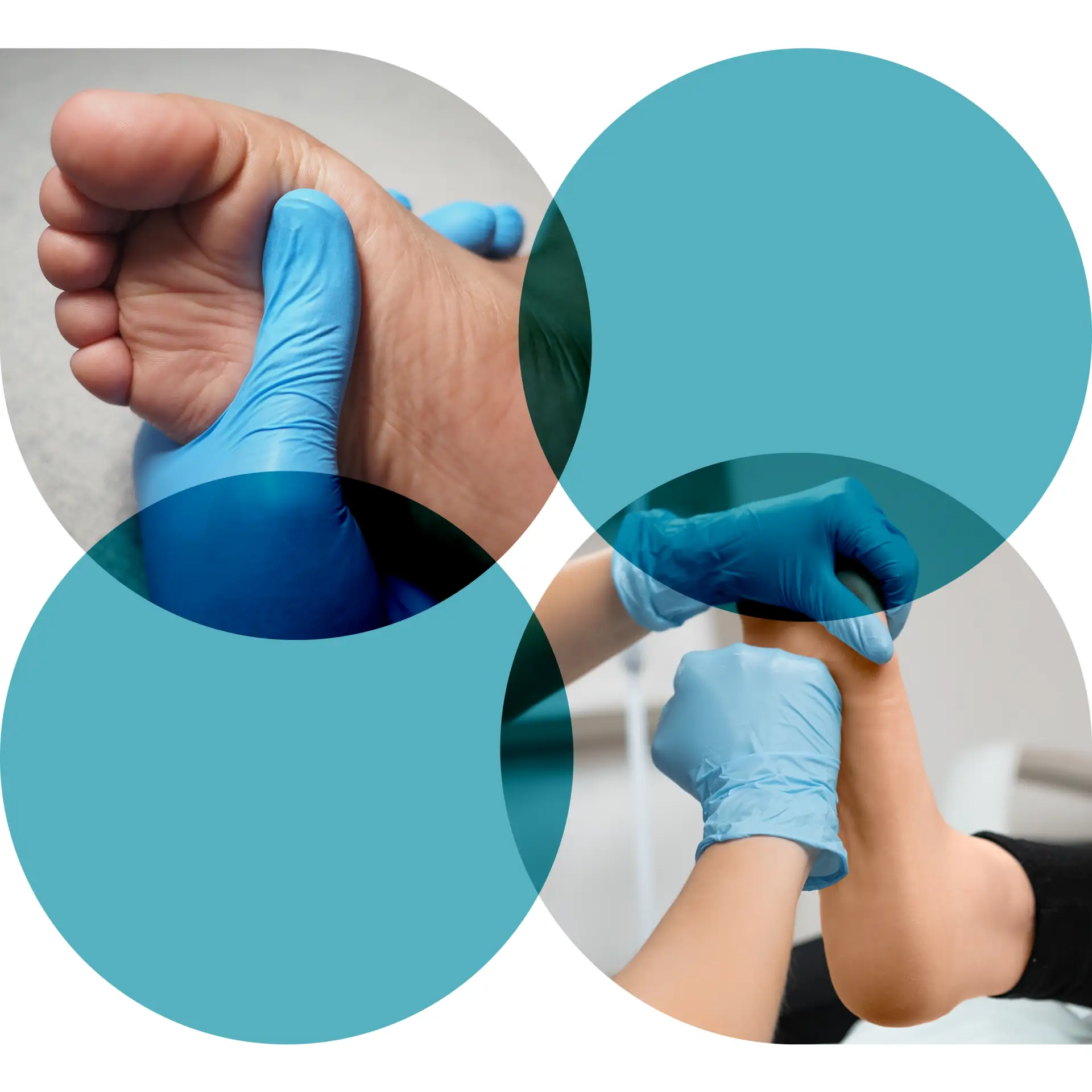
If your big toe has become stiff, painful, or difficult to bend when walking, you may have hallux rigidus, the medical term for arthritis of the main joint at the base of the big toe. Also known as stiff big toe or big toe arthritis, it is one of the most common foot conditions in adults and tends to worsen without the right treatment. Caught early (sometimes called hallux limitus), it often responds well to non-surgical care. For more advanced cases, minimally invasive keyhole surgery can restore comfortable movement and allow you to return to full activity.
Understanding Hallux Rigidus
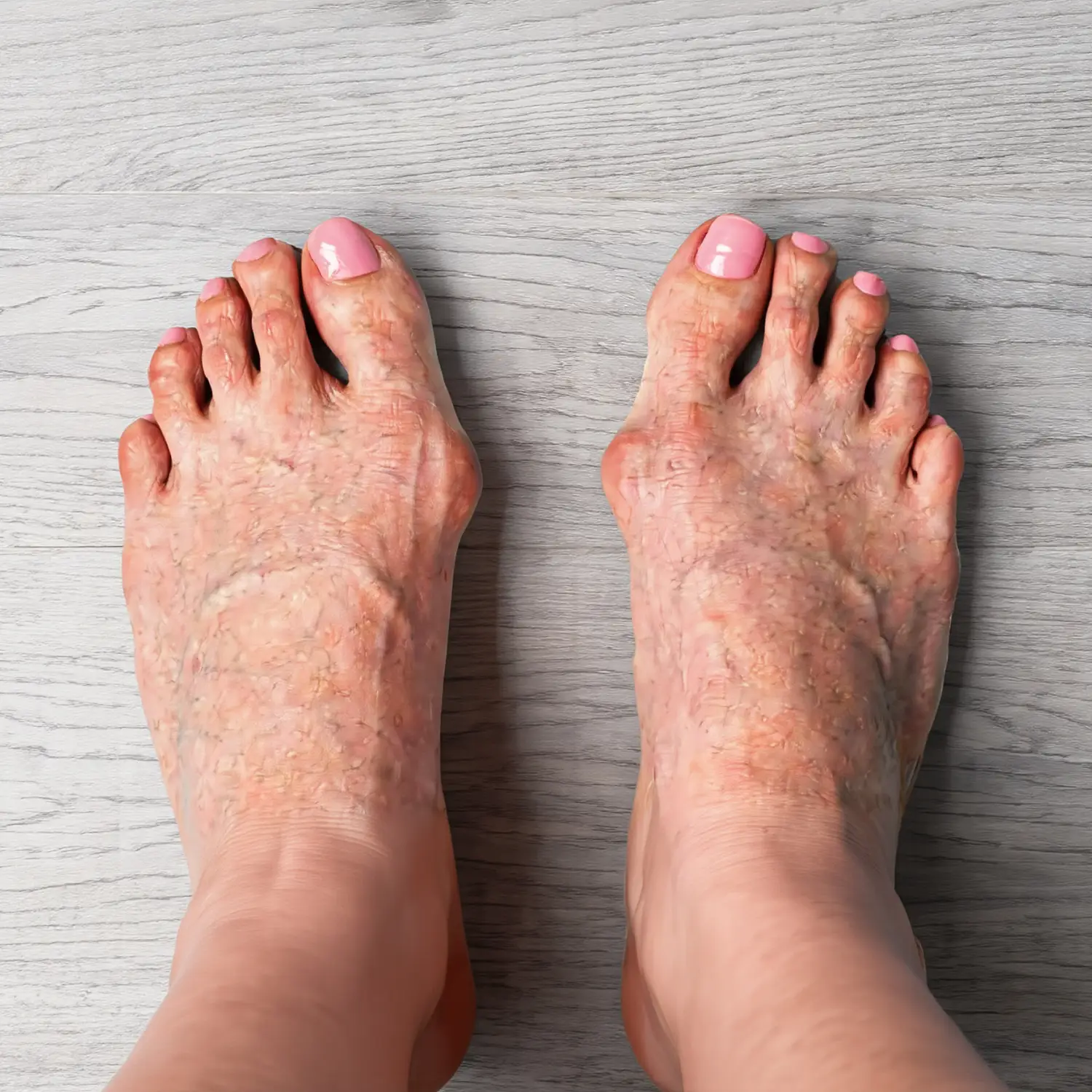
Hallux rigidus is arthritis of the metatarsophalangeal (MTP) joint, the large joint at the base of your big toe. The word 'hallux' refers to the big toe, and 'rigidus' reflects the progressive stiffness that develops as the cartilage within the joint wears down. As the smooth cartilage surface erodes, bone begins to rub against bone, and bony spurs known clinically as osteophytes can form on top of the joint, making normal movement painful and restricted.
The condition sits on a spectrum. In its early form, sometimes called hallux limitus, some movement remains, and symptoms are intermittent. As it advances, pain can occur even at rest, and the bony lump on top of the joint becomes visible and tender in shoes. At its most severe, the joint loses almost all movement.
If you have already been told by your GP that you have hallux rigidus or arthritis of the big toe, or if you are simply tired of waiting to find out what is wrong, a private consultation means you can be assessed, diagnosed, and started on a treatment plan quickly. For patients with private medical insurance, most treatment, including imaging, injections, and surgery, is covered. For self-funding patients, same-day appointments are available at four central London clinic locations.
Symptom Checklist
Symptoms vary depending on how far the condition has progressed. Tick anything that applies to you. The more that apply, or the longer they have been present, the more important it is to get a proper assessment sooner rather than later.
If three or more of these sound familiar, you are probably overdue for a proper assessment. The earlier we catch hallux rigidus, the more treatment options are available to you. Non-surgical approaches work best before the joint deteriorates significantly.
Treatment Pathway
Most people with hallux rigidus do not need surgery. The right treatment depends on how far the condition has progressed, your activity level, and what you have already tried. The goal at every stage is to use the least invasive approach that reliably relieves your pain and restores your movement, escalating only when the evidence calls for it.

For mild to moderate hallux rigidus, non-surgical treatment is the starting point and, for many patients, the only treatment they need. A plan is built around your specific symptoms and foot mechanics. It typically includes stiff-soled or rocker-bottom footwear to reduce the load through the joint as you walk. Custom orthotics can correct underlying biomechanical issues such as flat arches or overpronation. Targeted exercises help strengthen the toe joint and surrounding muscles, and anti-inflammatory medication manages acute flares.
Stiff-soled and rocker-bottom footwear advice
Custom orthotics
Structured exercise programme

When non-surgical care has provided partial but insufficient relief, or where there is significant inflammation in the joint, an ultrasound-guided injection can offer targeted pain relief and help restore function. Ultrasound guidance ensures precise placement directly into the joint, which improves both accuracy and comfort.
Corticosteroid injection
Hyaluronic acid injection, joint lubricant
Ultrasound guidance for precision placement

Surgery is considered when non-surgical management has not provided sufficient relief, typically after several months of structured care. The choice of procedure depends on the grade of arthritis, the amount of joint space remaining, and your lifestyle and activity demands.
Minimally invasive cheilectomy
1st MTP joint fusion (arthrodesis)
Joint replacement (arthroplasty)

LMS, PhD. Consultant Trauma and Orthopaedic Surgeon. Foot and Ankle.
Consultant at The Royal London
Board member, GRECMIP
Honorary Senior Lecturer
Mr Malagelada is a fellowship-trained Consultant Trauma and Orthopaedic Surgeon who treats foot and ankle conditions exclusively. He trained in Spain and the UK at The Royal National Orthopaedic Hospital and The Royal London, and holds a BOFAS-accredited Foot and Ankle fellowship (Windsor). He has practised as a consultant at The Royal London Hospital since 2017, where he also teaches on the MSc in Orthopaedic Trauma Sciences at Queen Mary University of London.

Testimonials
Real patients. Real outcomes. Verified independently on Doctify.
Hallux limitus and hallux rigidus describe different stages of the same condition: arthritis of the big toe joint. Hallux limitus refers to the earlier stage, where movement in the joint is reduced but not absent. You may notice pain when bending the toe upward, but still have some range of motion. Hallux rigidus describes a more advanced stage where movement is severely restricted, and pain can occur during rest as well as activity. The distinction matters because treatment options are broader in the limitus stage, which is one reason early assessment is so valuable.
Yes, and for many patients it is. Non-surgical treatment, including footwear modification, custom orthotics, a structured exercise programme, and anti-inflammatory medication, can significantly reduce symptoms, particularly in earlier stages of the condition. Ultrasound-guided injections can provide additional relief when non-surgical measures alone are insufficient. Surgery is only considered when non-surgical management has not provided adequate improvement, typically after several months of structured care.
It depends on the procedure, and the honest answer is that recovery varies more between individuals than most surgical leaflets suggest. After a minimally invasive cheilectomy, many patients are walking the same day in a surgical shoe, and most are back in normal footwear within four to six weeks. Return to sport varies but is typically possible from around eight to twelve weeks. After a joint fusion (arthrodesis), the bone needs time to heal. Most patients are walking in a boot for around two weeks, and full recovery, including return to sport, usually takes three to four months. Your specific timeline will be discussed at your pre-operative consultation.
For most people, yes. Hallux rigidus is a progressive condition; cartilage does not regenerate, and the joint tends to deteriorate over time, particularly if the underlying biomechanical factors driving it are not addressed. Early-stage hallux limitus can be managed with non-surgical treatment, and progression can be slowed. Ignoring symptoms for months or years reduces the surgical options available if non-surgical care eventually proves insufficient.
No. If you are paying for your own care, you can contact the clinic directly, and appointments are typically available within the same week. If you are using private health insurance, the majority of major UK insurers, including Bupa, AXA Health, Aviva, Vitality, WPA, and Cigna, do not require a referral from a General Practitioner (GP) to see a private orthopaedic consultant for hallux rigidus. It is always worth confirming your individual level of cover with your insurer before your appointment, as policies vary. If you are unsure how to proceed, a member of the team is happy to guide you through the process.
No. They are different conditions, though both affect the big toe and can sometimes occur together. A bunion (hallux valgus) is a deformity where the big toe drifts toward the second toe, causing a bony prominence on the inner side of the foot. Hallux rigidus is arthritis of the joint itself, causing stiffness and pain with movement. The treatments are different, and an accurate diagnosis is essential to ensure you receive the right care.
High-impact activities that repeatedly bend the big toe, such as running on hard surfaces, jumping, deep squats and lunges, tend to aggravate the joint. Yoga positions that push the toes flat against the floor, such as downward dog, can also cause flare-ups. Lower-impact alternatives such as swimming and cycling place minimal stress on the big toe joint and are generally well tolerated. A tailored exercise plan will be recommended at your consultation, based on your specific stage of the condition and your activity goals.
Still have questions?
Click on the button on the right to send your enquiry through. A member of Mr Malagelada's team will reply within one working day.