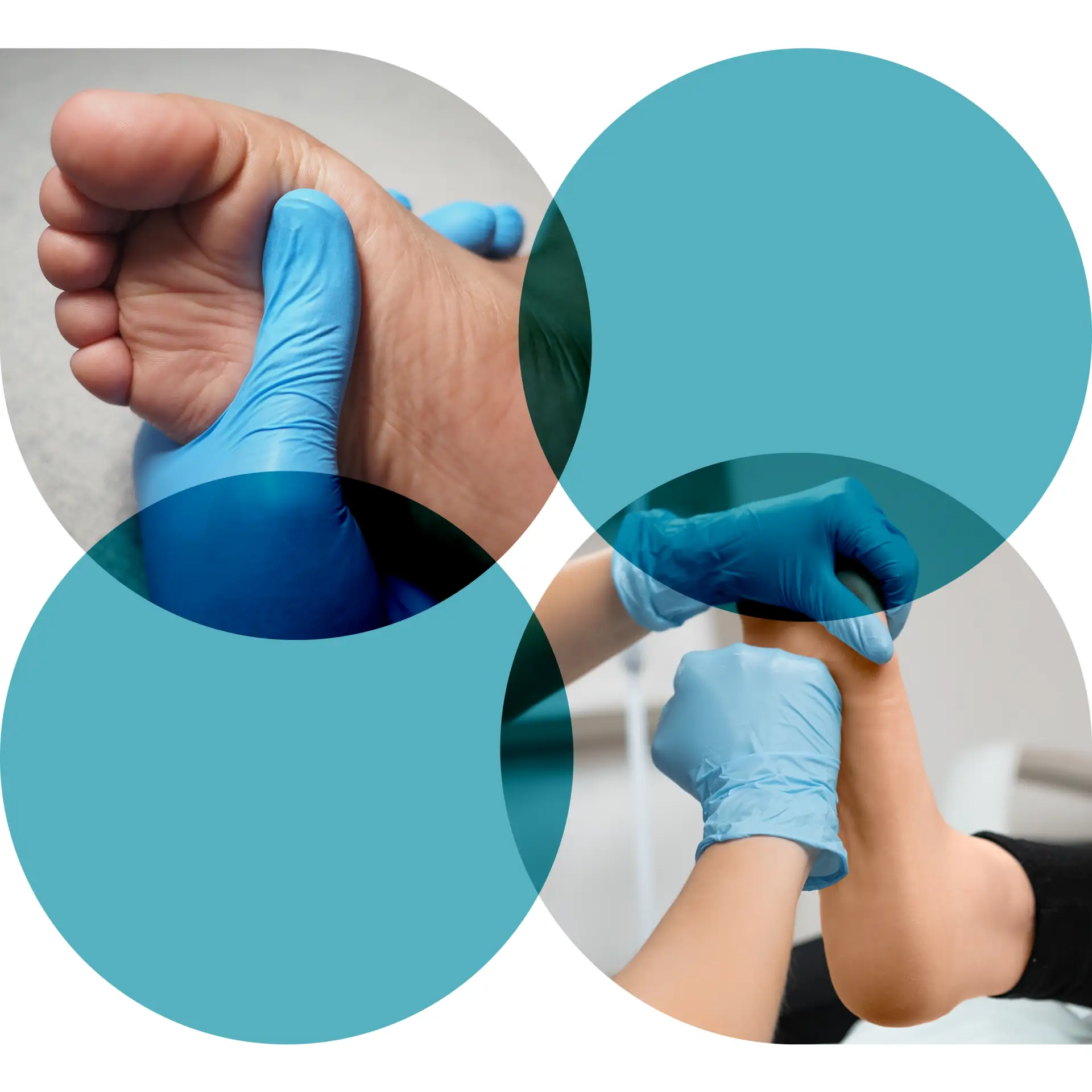
If one or more of your lesser toes has begun to bend, curl, or press against your footwear in a way that causes pain or makes finding comfortable shoes difficult, you may have a hammer toe or claw toe deformity. Both are progressive conditions that rarely improve on their own, and the earlier they are assessed, the more treatment options remain available. Mr Francesc Malagelada is a Consultant Foot and Ankle Surgeon with a PhD in minimally invasive surgery and a 4.98 / 5 rating from 177 verified Doctify reviews. He will assess your toes, confirm the type and severity of deformity, and recommend the most conservative treatment likely to restore comfort. Surgery is only ever recommended when it is genuinely the right option.
Understanding Hammer & Claw Toes
Hammer toes and claw toes are both lesser toe deformities, meaning they affect the second, third, fourth, or fifth toes rather than the big toe. They are more common than most people realise, and they share the same root cause: an imbalance in the muscles, tendons, and ligaments that ordinarily keep the toe straight.
A hammer toe bends abnormally at the middle joint (the proximal interphalangeal joint), causing the end of the toe to point downward and the joint to rise up. It most commonly affects the second toe. It typically starts as a flexible deformity, meaning the toe can still be straightened manually, before becoming fixed over time.
A claw toe involves a bend at two joints. The toe bends upward where it meets the foot (the metatarsophalangeal joint) and curls down at both the middle and end joints. Claw toe often affects all four lesser toes simultaneously and is frequently linked to an underlying neurological or structural cause, including high arches (cavus foot) or conditions such as rheumatoid arthritis.
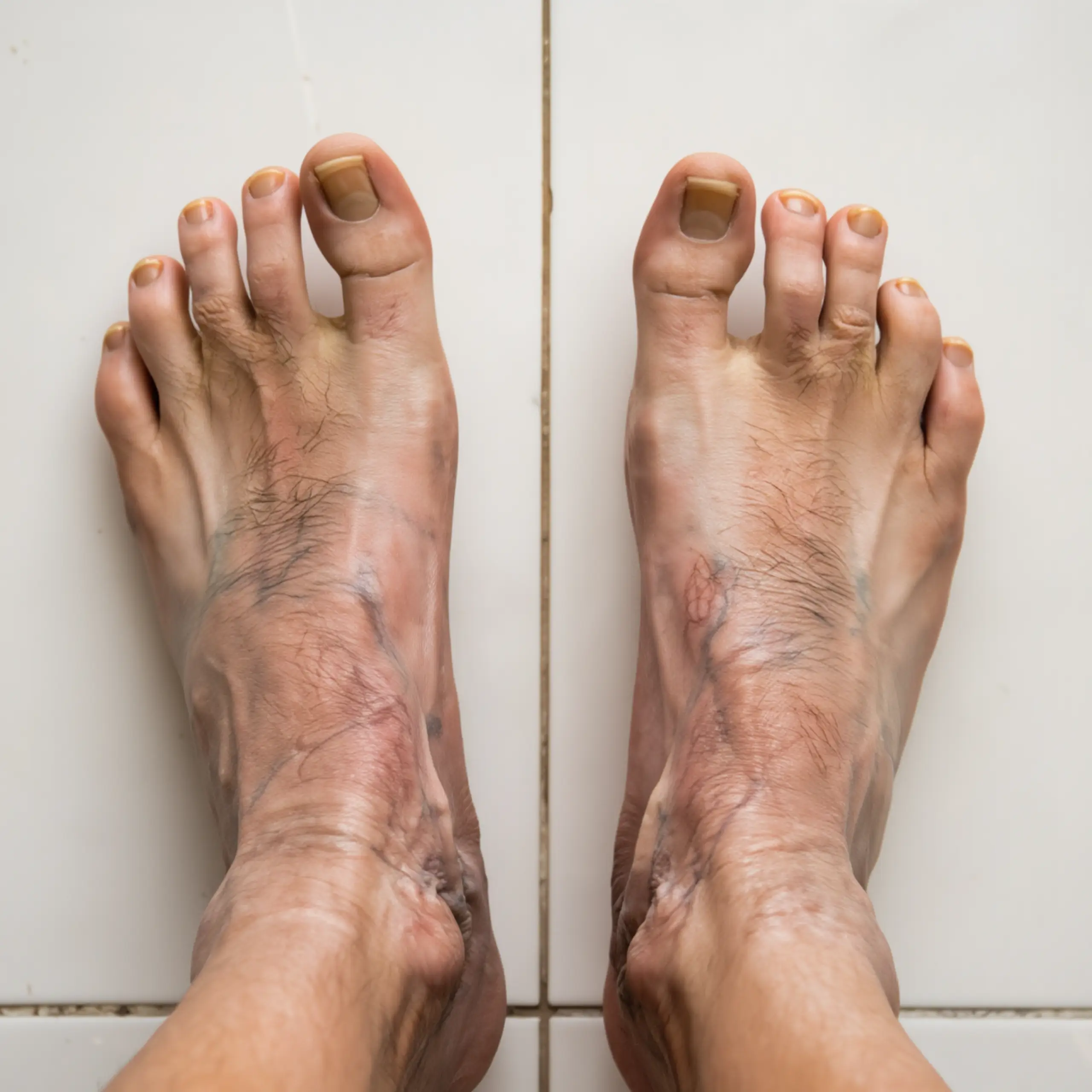
Symptom Checklist
Symptoms vary depending on how far the deformity has progressed. Tick anything that applies to you. The more that apply, or the longer they have been present, the more important it is to get a proper assessment sooner rather than later.
If three or more of these sound familiar, a specialist assessment is the right next step. Most lesser toe deformities worsen gradually over time, and the treatment options narrow the longer a fixed deformity is left untreated. Non-surgical approaches work best before the joint deteriorates significantly.
Treatment Pathway
Most people with a hammer toe or claw toe deformity do not need surgery. The right treatment depends on whether the deformity is flexible or fixed, the level of pain, and any related conditions in the same foot. We always start with the least invasive option and escalate only if needed.

For flexible deformities that are still correctable passively, non-surgical treatment can relieve symptoms, slow progression, and in some cases prevent the need for surgery altogether. Mr Malagelada will review your footwear, advise on appropriate solution for you.
Toe splints and silicone sleeves
Custom orthotics
Stretching and exercise programme

Where significant inflammation is present around the affected joints or soft tissues, a targeted injection can ease symptoms for weeks to months and allow patients to continue with conservative management. Ultrasound guidance ensures precise placement, which improves both accuracy and comfort.
Corticosteroid injection
PRP injection for selected cases
Ultrasound guidance for precision placement

Surgery is considered when non-surgical management has not provided sufficient relief, or when the deformity has become fixed and cannot be corrected passively.
Tendon lengthening or transfer
Joint resection

LMS, PhD. Consultant Trauma and Orthopaedic Surgeon. Foot and Ankle.
Consultant at The Royal London
Board member, GRECMIP
Honorary Senior Lecturer
Mr Malagelada is a fellowship-trained Consultant Trauma and Orthopaedic Surgeon who treats foot and ankle conditions exclusively. He trained in Spain and the UK at The Royal National Orthopaedic Hospital and The Royal London, and holds a BOFAS-accredited Foot and Ankle fellowship (Windsor). He has practised as a consultant at The Royal London Hospital since 2017, where he also teaches on the MSc in Orthopaedic Trauma Sciences at Queen Mary University of London.

Testimonials
Real patients. Real outcomes. Verified independently on Doctify.
Hammer toe and claw toe describe different types of lesser toe deformity. A hammer toe bends at the middle joint only, causing the toe to arch upward with the tip pointing down, much like the head of a hammer. A claw toe bends at multiple joints: the toe bends back at the knuckle where it meets the foot, and curls down at both the middle and end joints, giving it a claw-like appearance. Claw toe tends to affect more toes at once and is more often linked to an underlying condition such as high arches or rheumatoid arthritis. The distinction matters because treatment is planned around the specific type of deformity and whether it is still flexible or has become fixed.
Yes, in the early stages. When the toe is still flexible, meaning it can be straightened gently by hand, non-surgical treatment can relieve symptoms and prevent the deformity from worsening. This includes appropriate footwear, silicone splints, custom orthotics, and targeted exercises. In Mr Malagelada's experience, most patients who come in at the flexible stage can avoid surgery with the right conservative treatment, but this window is shorter than most expect. Once the deformity becomes fixed and the joint can no longer be straightened, surgical correction is the only reliable way to achieve a lasting improvement. Seeking assessment early makes a practical difference to the options available.
The procedure depends on whether the deformity is flexible or fixed, and whether other conditions, such as a bunion or plantar plate injury, need to be addressed at the same time. For most patients, surgery involves a combination of tendon work and bone reshaping (either a joint resection or a joint fusion) to hold the toe in the correct position. Mr Malagelada uses minimally invasive techniques wherever possible, which means smaller incisions and a quicker recovery than with traditional open surgery. The procedure is typically performed under local or regional anaesthesia as a day case, so an overnight stay is not usually required, and a general anaesthetic is often unnecessary. Your surgeon will confirm the most appropriate anaesthesia for your situation at the consultation.
It depends on the procedure, and recovery varies more between individuals than most surgical leaflets suggest. Most patients are walking in a post-operative sandal or surgical shoe within a day or two of the procedure. Returning to normal footwear typically takes four to eight weeks, depending on the complexity of the correction. Swelling in the toes can persist for several months, which is completely normal and not a sign that anything is wrong. Full recovery, including a return to sport or high-impact activities, usually takes three to four months. Your specific timeline will be discussed at your pre-operative consultation.
No. If you are self-funding your care, you can book a consultation directly without a General Practitioner (GP) referral, and appointments are typically available within the same week. If you are using private medical insurance, most insurers require a GP referral before they will authorise a specialist consultation. Contact your insurer in advance to confirm their requirements. Mr Malagelada's team can help with insurance pre-authorisation queries and will liaise with your insurer throughout your care.
Most major UK private medical insurers cover hammer toe and claw toe correction, including consultations, diagnostic imaging, injections, and surgery, provided the condition is not a pre-existing exclusion on your policy. We are recognised by Bupa, AXA Health, Aviva, Vitality, WPA, and Cigna. Cosmetic-only corrections are not usually covered. We recommend confirming your level of cover with your insurer before your appointment. If you are self-funding, transparent pricing can be discussed at the time of booking.
Yes, and in many cases this is the recommended approach. Bunions are one of the most common mechanical causes of hammer toe deformity. The outward drift of the big toe alters loading across the forefoot and forces the second toe into an abnormal position. Treating the bunion without addressing the hammer toe, or the reverse, can produce suboptimal results. Where both conditions are present, Mr Malagelada will typically plan a combined correction in a single operating session, reducing the total recovery time and achieving a better overall outcome.
Still have questions?
Click on the button on the right to send your enquiry through. A member of Mr Malagelada's team will reply within one working day.