
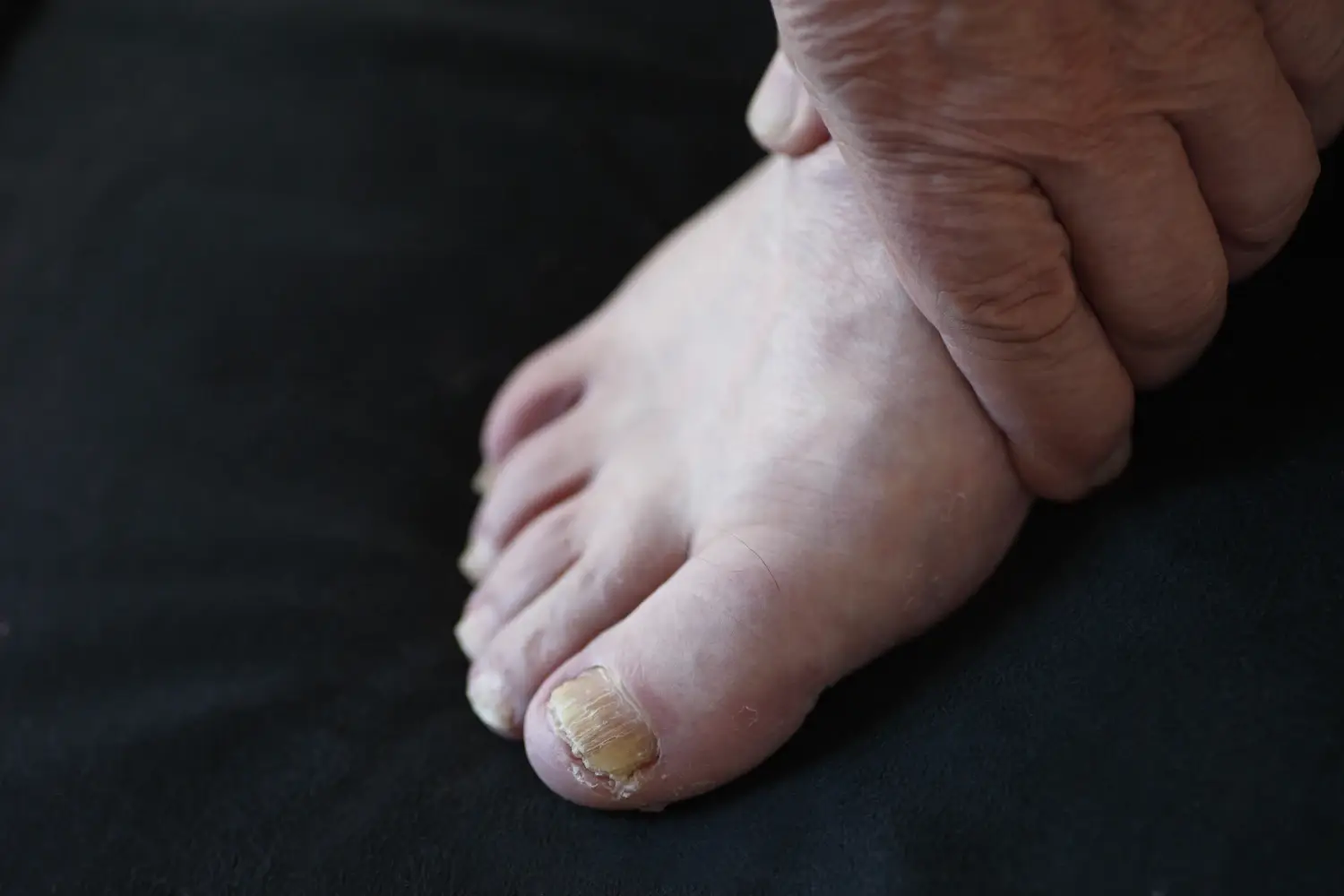

Minimally invasive bunion surgery recovery is typically faster and less painful than traditional open techniques. Most patients walk on the same day, return to normal footwear within three to six weeks, and resume sports at two to three months (depending on intensity). Individual timelines vary, and your consultant will advise based on your anatomy, the complexity of the correction, and how your osteotomy heals.
What is minimally invasive bunion surgery?
A bunion (hallux valgus) is a bony deformity at the base of the big toe. Conventional open surgery involves a large incision, cutting and repositioning the metatarsal bone, and fixing it with metal plates or screws. Recovery from open surgery typically requires six to twelve weeks off work and three to six months before returning to sport.1
Minimally invasive bunion surgery uses very small incisions (usually 5 mm or less) and a motorised burr guided under real-time X-ray. The MICA technique repositions both the metatarsal (chevron cut) and the proximal phalanx (Akin cut), securing the corrected bones with headless compression screws that sit entirely within the bone.1,2 Soft-tissue damage is greatly reduced because there is no need to open the joint.
NICE published HealthTech guidance (HTG723, June 2024) confirming that minimally invasive percutaneous techniques with internal fixation for hallux valgus correction are safe and effective, and that patient-reported outcomes are broadly comparable to open surgery with a more favourable wound-healing profile.2
Minimally invasive bunion surgery recovery time: the full timeline
Recovery milestones vary between patients, but the following timeline reflects what most people experience after MICA surgery at The LOFT Clinic. Your surgical team will tailor advice to your situation at each review appointment.
Day of surgery and the first 24 to 48 hours
MICA is performed as a day case. You arrive on the day of surgery, have the procedure under sedation or general anaesthesia, and go home the same day wearing a flat post-operative shoe. You can bear weight and walk in it immediately.2
A regional nerve block numbs the foot for several hours after surgery. Most patients describe the first 24 to 48 hours as mildly uncomfortable rather than severely painful, though individual pain experience varies. You will be prescribed regular paracetamol and, where appropriate, an anti-inflammatory. A study we conducted shows that pain during the first 24 hours is halved in MIS when compared to open surgery, and only at a level of 2 out of 10 in severity.
Keep the foot elevated as much as possible for the first two weeks. This reduces swelling and protects the healing osteotomy. Avoid lying flat with the foot down for extended periods. Ice wrapped in a cloth and applied for 10 to 15 minutes several times a day can also help.
Week two: the first wound review
At two weeks, Mr Malagelada carries out a wound review. The dressings are changed, the incisions are inspected, and early movement of the big toe is assessed and guided. Swelling is checked clinically, and alignment is confirmed.
At this stage, most patients can begin to move out of the post-operative shoe and into a wide, comfortable trainer for short periods of flat walking. Physiotherapy exercises can commence. Your physiotherapist will show you gentle range-of-motion exercises for the big toe joint, as the joint can stiffen quickly if movement is delayed.
Patients who return to a desk job in this window tend to do well, provided they can keep the foot elevated regularly when seated. A patient who spends long days on their feet may find the transition harder; bringing a spare post-op shoe to the work place for the first week back is practical advice that we often give.
Many office-based workers return to work in this window. For labour work or jobs requiring long periods of standing, a phased return would be recommended and back to full duties at around 6 weeks from surgery.
Weeks four to six: transition to normal footwear
Swelling begins to reduce noticeably by week four. Most patients feel confident walking further and returning to daily activities. The post-operative shoe is no longer needed at this stage for the majority of patients, though some prefer to continue wearing it for added comfort on longer walks.
By week six, most patients can return to a wide, low-heeled shoe or soft trainer. High heels and narrow-toed footwear should be avoided until the osteotomy is fully consolidated, which typically occurs between weeks six and twelve. Your surgeon will confirm this with weight-bearing X-rays at the six-week appointment.
Week six: the X-ray review
At the six-week review, weight-bearing X-rays confirm that the osteotomy is healing in the correct position. The bone angles are measured against your pre-operative X-rays to confirm alignment.
If healing is progressing as expected, non-impact activities such as swimming, cycling, and yoga can typically be resumed. This milestone marks the end of the protected phase of recovery.
Patients who have jobs involving prolonged standing or manual work may still need modifications at this point. Your surgeon will advise when a full return to those activities is safe.
Week twelve: return to impact sport and running
At week twelve, a further weight-bearing X-ray is taken to confirm that the osteotomy has consolidated. If healing is complete, impact activities, including running, racket sports, and gym work, are cleared.
A 2025 systematic review of MICA surgery in patients with severe hallux valgus (more than 40 degrees of deformity) found good clinical outcomes and high patient satisfaction at a mean follow-up of nearly two years, with significant improvement in validated outcome scores and radiological angles.3
Don’t rush this stage. The bone may feel and look stable at week eight, but full structural consolidation takes twelve to sixteen weeks for most patients. Returning to high-impact activity too early risks disrupting the osteotomy and prolonging recovery.
Three to six months: full recovery
The majority of swelling has resolved by three months. Some residual puffiness around the toe and forefoot can persist for up to six months, particularly at the end of an active day. That is normal. It does not indicate a problem.
By six months, most patients report that the foot feels close to normal in everyday footwear and activities. The correction is durable: published data on MICA surgery show low recurrence rates when the procedure is performed by an experienced surgeon.3
Residual sensitivity or mild stiffness in the big toe joint is not unusual at three to four months. Physiotherapy and active stretching exercises can help restore the full range of motion. Read more about stretches to improve foot and ankle flexibility during recovery.
Recovery timeline at a glance
|
Timeframe
|
Milestone
|
Activity level
|
|---|---|---|
|
Day of surgery
|
Day case, go home in post-op shoe
|
Walk immediately (post-op shoe)
|
|
Week 2
|
Wound review, dressings changed, physio begins
|
Short walks, desk work possible
|
|
Weeks 4 to 6
|
Transition to normal footwear, swelling reducing
|
Increased daily walking
|
|
Week 6
|
X-ray confirms osteotomy healing
|
Swimming, cycling, yoga
|
|
Week 12
|
X-ray confirms osteotomy consolidated
|
Running, gym, impact sport
|
|
3 to 6 months
|
Swelling resolved, foot feels normal
|
Full activity, all footwear
|
How does minimally invasive bunion surgery recovery compare to open surgery?
The main advantages of minimally invasive surgery over traditional open techniques relate to wound size, post-operative pain, reduced stiffness, and the speed of return to normal footwear and activity.
Because the joint is not opened and soft-tissue disruption is minimal, patients typically experience less post-operative swelling and discomfort. The very small incisions (usually three to four entry points of 5 mm or less) also carry a lower risk of wound complications.2
A 2023 systematic review and meta-analysis published in Clinical Orthopaedics and Related Research found that minimally invasive surgery for hallux valgus was associated with comparable radiological correction and patient-reported outcomes to open surgery, with a more favourable wound complication profile.4 Open surgery generally requires six to twelve weeks in the post-operative shoe, whereas most MICA patients transition out of it within two to four weeks.1
Minimally invasive techniques are not always the right choice. Very severe deformities, previous failed surgery, or certain anatomical features may make an open approach more appropriate, although the keyhole indications are expanding and most surgeries can benefit from these techniques. Mr Malagelada will assess your foot clinically and on X-ray before recommending the most suitable technique for your individual anatomy. Given the advantages of minimally invasive surgery, these will be indicated as safely as possible. You can read more about what keyhole surgery involves and what its benefits are, and about what a bunion is and whether surgery is needed.

Mr Francesc Malagelada
Mr Francesc Malagelada is a highly respected Consultant Trauma and Orthopaedic Surgeon based at the Royal London Hospital, the largest Trauma Centre in the UK. He has a special interest in foot and ankle surgery and treats common conditions such as bunions, sports injuries, ligament damage, tendon issues, as well as complex conditions that require reconstruction surgery. Mr Malagelada takes a patient-centric approach to care and offers both surgical and non-surgical options to adapt to each patient’s lifestyle.
What factors affect how quickly you recover?
Recovery from minimally invasive bunion surgery varies from person to person. A mild to moderate bunion correction typically heals faster than a severe one. Complex deformities require a larger osteotomy cut and more bone movement, which may take additional weeks to consolidate.
Your general health and bone quality
Conditions such as osteoporosis, diabetes, or smoking can slow bone healing. Your consultant will discuss any relevant medical history at the pre-operative consultation. Vitamin D and calcium levels may be checked and optimised before surgery if clinically appropriate.
How well you follow post-operative guidance
Elevation in the first two weeks, early physiotherapy, and wearing appropriate footwear all make a measurable difference. Patients who do not elevate the foot sufficiently in the early weeks tend to experience more prolonged swelling (this is the single most common reason for a slower-than-expected recovery in our experience). Overloading the foot before the osteotomy has consolidated is the other.
Surgeon experience and technique
Outcomes in minimally invasive hallux valgus surgery are strongly related to surgeon volume and experience. NICE HTG723 guidance recommends that these procedures be performed by surgeons with appropriate training and that outcomes be entered into a registry such as the BOFAS registry.2 Mr Malagelada has performed MICA surgery since its introduction in the UK and has contributed to the published literature on the technique. He was among the first UK surgeons to adopt the approach formally, and his outcomes are submitted to the national registry.
The role of physiotherapy in bunion surgery recovery
Start physiotherapy at week two, and the difference in stiffness by week six is measurable. Physiotherapy is arranged separately from the surgical package and typically involves three to four sessions with a physiotherapist experienced in foot and ankle post-operative rehabilitation.
The aim is to restore the range of motion in the big toe joint and prevent stiffness. It also reduces swelling and helps you return to walking with a normal gait. Most patients find that the daily home exercises are manageable in 10 to 15 minutes; the clinical sessions (usually between weeks four and twelve) are where the programme is adapted to your progress.
The physiotherapy team works in coordination with the surgical team so that your exercise programme, surgical follow-up, and nursing care are fully joined up.
Signs to watch for during recovery
Some discomfort, swelling, and bruising in the first few weeks are normal. Certain symptoms should prompt you to contact your surgical team promptly.
Contact The LOFT Clinic if you notice any of the following:
- Increasing redness, heat, or swelling around the wound beyond the first week
- Discharge from the wound site, particularly if cloudy or offensive-smelling
- Sudden worsening of pain that is not controlled by the prescribed medication
- Fever or feeling generally unwell after surgery
- Calf pain, swelling, or redness (which may indicate a deep vein thrombosis and requires urgent assessment)
Routine swelling that increases after walking, or that is worse in the evenings, is expected and not a cause for concern. If you are unsure about any symptom, the secretarial team is available on 020 8629 0932 during office hours, or attend A&E out of hours if urgent.
Frequently asked questions
How long does minimally invasive bunion surgery recovery take?
Most patients can walk immediately after surgery in the post-operative shoe. Transition to normal footwear typically occurs at four to six weeks. Non-impact exercise resumes at six weeks, and running and sports at twelve weeks. The majority of swelling resolves by three to six months, at which point most patients feel their foot is back to normal.
When can I drive after minimally invasive bunion surgery?
This depends on which foot was operated on and whether you drive a manual or automatic vehicle. For right foot surgery, most patients are cleared to drive an automatic at around six weeks, once they can perform an emergency stop comfortably. For left foot surgery in an automatic vehicle, this may be earlier. Your consultant will advise at the six-week review. Do not drive until you are confident you can do so safely and have confirmed this with your surgeon.
How long will I need off work after keyhole bunion surgery?
Desk-based workers can often return to work within two weeks, working from home with the foot elevated if possible. Those in roles that involve prolonged standing, walking, or manual work may need four to eight weeks. Your surgeon will advise a realistic return-to-work timeline at the pre-operative consultation, once they understand your job requirements.
Can I have both bunions operated on at the same time?
Surgery on both feet simultaneously is technically possible but is generally not recommended. Recovery from bilateral simultaneous bunion surgery is considerably more demanding, as you would be non-weight-bearing on both feet for a period. Sequential single-foot procedures, spaced at least one month apart, are typically recommended for patient comfort and safety.
Is minimally invasive bunion surgery available on the NHS?
Minimally invasive bunion surgery is available on the NHS at some centres, but access varies by area. NICE guidance (HTG723) confirms that the technique is safe and effective and should be offered by appropriately trained surgeons.2 NHS waiting times for elective foot surgery vary considerably by region. Private patients are typically able to arrange a consultation and discuss their options more quickly than NHS pathways allow.
Will my bunion come back after minimally invasive surgery?
No surgery can guarantee that a bunion will never recur, but recurrence rates following MICA when performed by an experienced surgeon are very low. Published systematic review data show durable correction and high patient satisfaction at two-year follow-up with recurrence rates as low as 3%.3 Wearing appropriate, wide-fitting footwear after surgery helps reduce the likelihood of recurrence.
Ready to take the next step?
If you are considering minimally invasive bunion surgery and would like to understand whether you are a candidate, Mr Francesc Malagelada offers same-day private consultations across four London clinics: King Edward VII’s Hospital (Marylebone), Cromwell Hospital (Kensington), Wharfside Health Centre (Canary Wharf), and Welbeck London (Mayfair). No GP referral is required, and both self-pay and insured patients are welcome.
Explore the full range of foot and ankle treatments available, or read more about what foot and ankle surgery involves. Video consultations are also available. Book an appointment online or call 020 8629 0932.
References
- NHS. Bunions. Available at: https://www.nhs.uk/conditions/bunions/. Cited in: open surgery recovery timeline; comparison with MICA timeline.
- NICE. Minimally invasive percutaneous surgical techniques with internal fixation for correcting hallux valgus (HTG723). Published 20 June 2024. Available at: https://www.nice.org.uk/guidance/htg723. Cited in: MICA technique description; safety and effectiveness; day-case procedure; wound complication risk; surgeon training and registry requirements; NHS FAQ answer.
- Ruberto P, Calori S, Bocchino G, et al. Utilisation of the minimally invasive chevron akin (MICA) osteotomy for severe hallux valgus: a systematic review. Musculoskelet Surg. 2025 Jun;109(2):133-143. doi: 10.1007/s12306-024-00869-3. PMID: 39432225. Available at: https://pubmed.ncbi.nlm.nih.gov/39432225/. Note: the word ‘Utilisation’ in this title is reproduced verbatim from the journal. Cited in: week-twelve outcomes; three-to-six-months section; FAQ recurrence answer.
- Alimy AR, Polzer H, Ocokoljic A, et al. Does Minimally Invasive Surgery Provide Better Clinical or Radiographic Outcomes Than Open Surgery in the Treatment of Hallux Valgus Deformity? A Systematic Review and Meta-analysis. Clin Orthop Relat Res. 2023 Jun 1;481(6):1143-1155. doi: 10.1097/CORR.0000000000002471. PMID: 36332131. Available at: https://pubmed.ncbi.nlm.nih.gov/36332131/. Cited in: MIS vs open surgery comparison section.
- Minimally Invasive Hallux Valgus Surgery-A Systematic Review and Assessment of State of the Art. Jeyaseelan L, Malagelada F. Foot Ankle Clin. 2020 Sep;25(3):345-359. doi: 10.1016/j.fcl.2020.05.001.
- Minimally invasive surgery for hallux valgus: a systematic review of current surgical techniques. Malagelada F, Sahirad C, Dalmau-Pastor M, Vega J, Bhumbra R, Manzanares-Céspedes MC, Laffenêtre O. Int Orthop. 2019 Mar;43(3):625-637. doi: 10.1007/s00264-018-4138-x.
- Increasing the safety of minimally invasive hallux surgery-An anatomical study introducing the clock method.Malagelada F, Dalmau-Pastor M, Fargues B, Manzanares-Céspedes MC, Peña F, Vega J. Foot Ankle Surg. 2018 Feb;24(1):40-44. doi: 10.1016/j.fas.2016.11.004.
- Open vs Minimally Invasive Scarf Osteotomy for Hallux Valgus Correction: A Randomized Controlled Trial. Torrent J, Baduell A, Vega J, Malagelada F, Luna R, Rabat E. Foot Ankle Int. 2021 Aug;42(8):982-993. doi: 10.1177/10711007211003565.