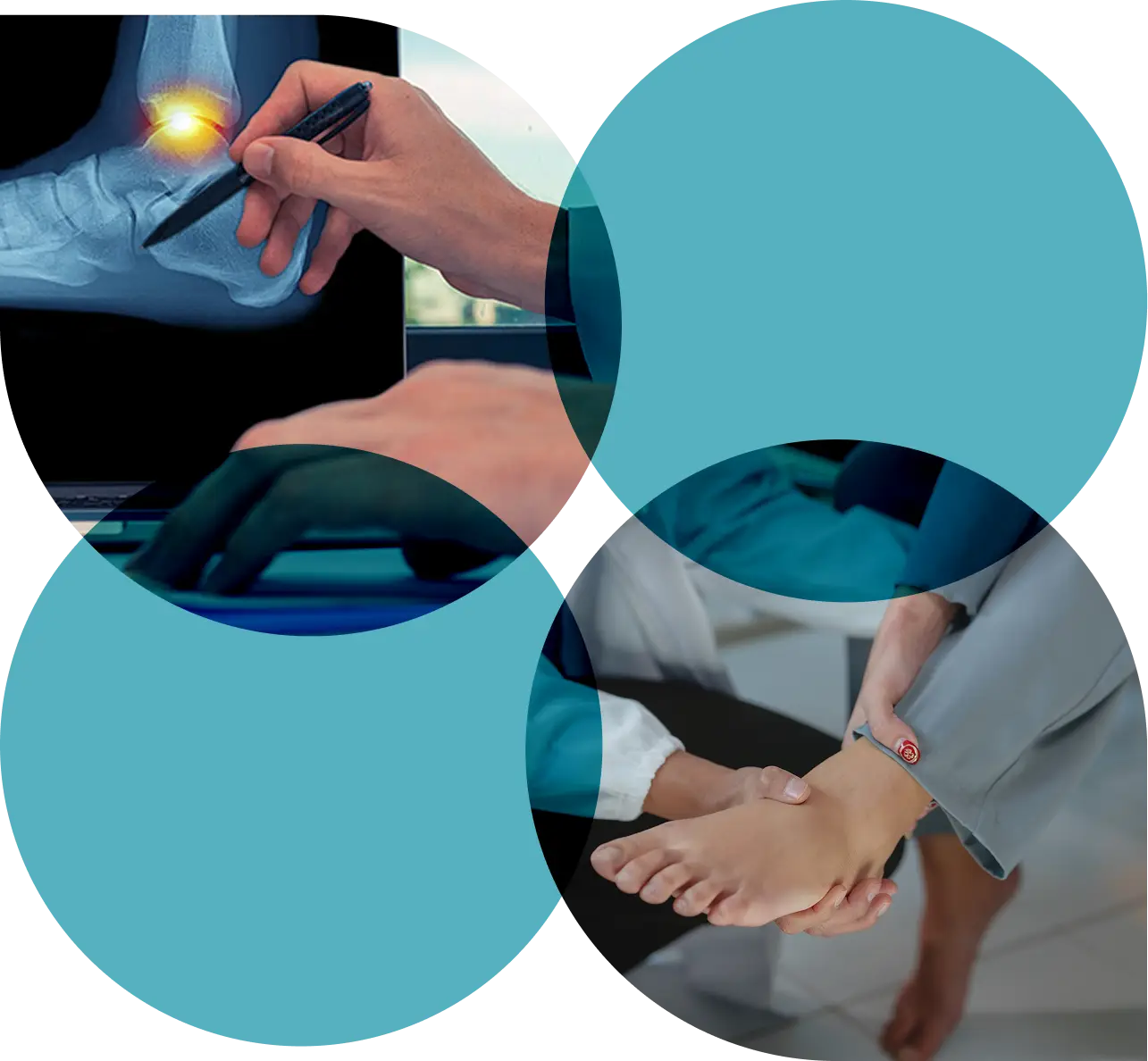
A burning or shooting pain in the ball of your foot, tingling toes, or the feeling of a pebble stuck in your shoe are the classic signs of Morton's neuroma, a thickened nerve between the bones of the forefoot. It is benign and very treatable. Mr Francesc Malagelada is a fellowship-trained consultant orthopaedic surgeon who diagnoses and treats Morton's neuroma at four central London clinics, from footwear changes and ultrasound-guided injections to surgery when it is truly needed.
Understanding Morton's Neuroma
Morton's neuroma is a thickening of one of the small nerves that run between the long bones of the foot and into the toes. Despite the name, it is not a tumour. The nerve becomes squeezed where it passes beneath a tight ligament between the metatarsal heads, and scar-like tissue builds up around it. It most often develops between the third and fourth toes. Narrow or high-heeled footwear, high-impact sport, tight calves, and foot shapes such as bunions, hammer toes, or flat feet all increase the load on the nerve.
Symptoms usually build gradually, flaring in certain shoes or after a long day on your feet, then becoming more frequent and intense over months. Larger, long-standing neuromas tend to respond less reliably to simple measures and injections, which is the practical case for an early assessment. Accurate diagnosis matters just as much, because several conditions mimic a neuroma. Clinical examination combined with an ultrasound scan confirms the diagnosis and rules out the look-alikes.
If you have already been told you have Morton's neuroma, or you are simply tired of guessing why the ball of your foot burns, a private consultation means you can be assessed, diagnosed, and started on a treatment plan quickly. Most private medical insurance covers treatment, including imaging, injections, and surgery. For self-funding patients, appointments are available at short notice at four central London clinics.
Symptom checklist
Morton's neuroma has a distinctive pattern once you know it. Tick anything that applies to you. The more that apply, or the longer they have been present, the more important a proper assessment becomes.
If three or more sound familiar, you are probably overdue for a proper assessment. The earlier a neuroma is caught, the more of the non-surgical options remain open to you.
Treatment Pathway
Most people with Morton's neuroma do not need surgery. Treatment follows a ladder, escalating only when a step has genuinely failed. The right starting point depends on how long you have had symptoms, the size of the neuroma on ultrasound, and how much it limits your life.

For early or mild neuromas, non-surgical treatment is the starting point and, for many patients, the only treatment they need. Shoes with a wide, deep toe box and a low heel take pressure off the nerve, and a small metatarsal pad or custom orthotic spreads the metatarsal heads to protect it further. Calf stretching reduces the load passing through the ball of the foot with every step. Given a fair trial of six to twelve weeks, this alone settles many early cases.
Footwear and metatarsal pad advice
Custom orthotics where needed
Calf stretching and activity guidance

When simple measures are not enough, an injection of corticosteroid and local anaesthetic around the nerve is the next step. Ultrasound guidance ensures the medicine lands precisely where it is needed, and the same scan confirms the diagnosis at your first visit. Relief varies from weeks to many months, and for some patients one injection is the end of the story. Because repeated steroid can thin the fat pad under the foot, injections are limited to two, occasionally three.
Ultrasound-guided corticosteroid injection
Diagnostic scan at the same visit
Back in normal shoes straight away

Surgery is considered when a proper trial of non-surgical care, including at least one well-placed injection, has not settled symptoms that genuinely limit your life. The two main operations are decompression, which releases the tight ligament pressing on the nerve, and excision, which removes the thickened segment of nerve. Both are day-case procedures through a small incision, taking around 30 to 45 minutes for a single neuroma. Published series report lasting relief for around 4 in 5 people, and every surgical risk, including permanent numbness between the affected toes after excision, is discussed openly before consent.
Decompression or excision (neurectomy)
Day-case surgery with early walking
Minimally invasive techniques where suitable

LMS, PhD. Consultant Trauma and Orthopaedic Surgeon. Foot and Ankle.
Consultant at The Royal London
Board member, GRECMIP
Honorary Senior Lecturer
Mr Malagelada is a fellowship-trained Consultant Orthopaedic Surgeon who specialises exclusively in conditions of the foot and ankle. He trained in Spain and the UK, including at The Royal National Orthopaedic Hospital and The Royal London, and holds a BOFAS-accredited Foot and Ankle fellowship. He has been a Consultant at The Royal London Hospital since 2017, where he also teaches on the MSc in Orthopaedic Trauma Sciences.

Testimonials
Real patients. Real outcomes. Verified independently on Doctify.
There is no single best treatment, whatever a single-therapy clinic may suggest. Specialists work up a ladder: footwear changes and a metatarsal pad first, then an ultrasound-guided steroid injection, with surgery reserved for neuromas that have defeated the steps below. The right rung depends on the size of the neuroma, how long you have had it, and how much it limits your life. That is exactly what your consultation establishes.
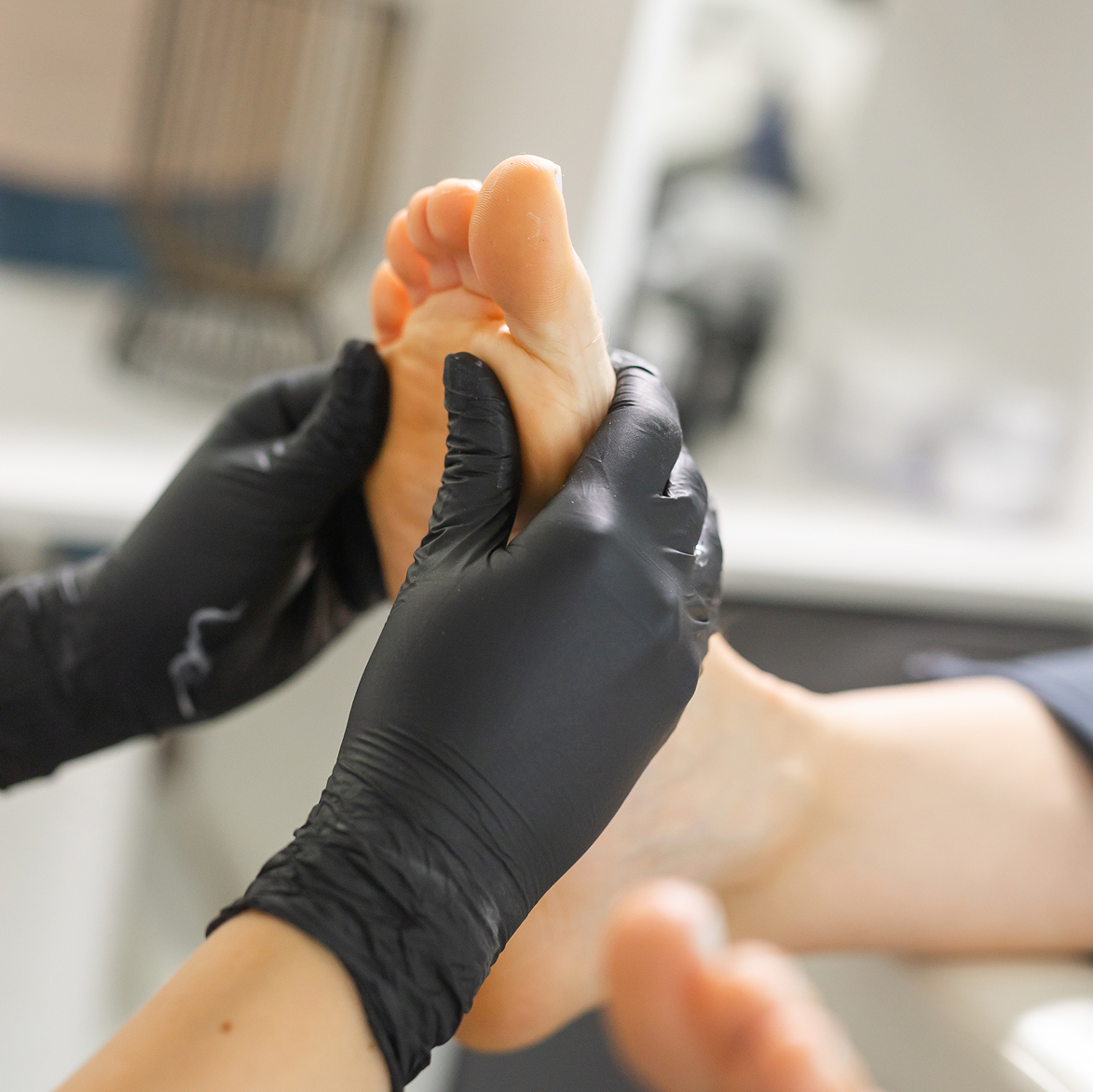
Diagnosis rests on your story, a hands-on examination, and an ultrasound scan. During the examination the forefoot is squeezed from side to side while the painful space is pressed from underneath. A swollen nerve can pop between the bones with a click you both feel, known as Mulder's click. Ultrasound then shows the nerve directly, measures it, and picks up look-alike problems such as bursitis. MRI is reserved for cases where the picture is unclear or surgery is being planned.
Symptoms can settle, particularly early on, if you switch to roomy, low-heeled shoes and offload the nerve with a metatarsal pad. The thickened nerve itself does not usually disappear, so pain can return if you go back to narrow footwear. That is why simple measures are always worth trying properly before anything invasive.
It is benign and never becomes cancerous, so there is no danger in itself. Left compressed, the nerve tends to become more swollen and more scarred, and symptoms become more frequent and intense. Larger, long-standing neuromas respond less reliably to simple measures and injections, so acting early keeps more of the non-surgical options open.
Yes, and it matters, because an injection or operation aimed at the wrong diagnosis will not work. Metatarsalgia, plantar plate injuries, bursitis, stress fractures, and arthritis can all mimic a neuroma. A consultant examination of the whole foot, combined with ultrasound and further imaging where needed, separates these conditions before any treatment is recommended.
Needle-based treatments that freeze or heat the nerve are offered by some London clinics, and you may see striking success rates quoted for them. The published evidence for both comes from small or observational studies, with no large trials comparing them against surgery, so treat like-for-like claims with care. Whether one of these options suits your neuroma, and what the evidence honestly supports, is discussed at your consultation.
The two main operations are decompression, which releases the ligament pressing on the nerve and preserves feeling, and excision, which removes the thickened segment of nerve. Both are day-case procedures under local, regional, or general anaesthetic, usually through a small cut on the top of the foot, taking around 30 to 45 minutes for a single neuroma. You walk on the day of surgery in a stiff-soled post-operative shoe.
You walk immediately in a post-operative shoe, keeping to short essential trips with the foot elevated for the first two weeks. Most people return to desk work within one to two weeks, a roomy trainer at two to four weeks, and driving once they can brake firmly, often two to four weeks. Impact sport typically returns at eight to twelve weeks, and swelling can take up to a year to settle fully.
After excision, the web space between the affected toes is permanently numb because the nerve supplying it has been removed. Most people notice it less over time and consider it a fair trade for losing the pain. Decompression preserves the nerve and feeling, which is one reason the choice of operation is discussed carefully at your consultation.
Serious problems are uncommon, and every risk is discussed openly before consent. They include infection or delayed wound healing, swelling that can persist for several months, a tender scar, incomplete relief of symptoms, and a stump neuroma, where the cut nerve end regrows into a painful knot in a small minority of patients. Rarely, a complex regional pain reaction can occur.
No. If you are paying for your own care, you can contact the clinic directly, and appointments are available at short notice. If you are using private health insurance, the majority of major UK insurers, including Bupa, AXA Health, Aviva, Vitality, WPA, and Cigna, do not require a GP referral to see a private orthopaedic consultant for Morton's neuroma. It is always worth confirming your individual level of cover before your appointment, as policies vary.
Still have questions?
Send a question using the form. A member of the team will reply within one working day.