
If your ankle keeps giving way, rolling, or feeling like it cannot be trusted on uneven ground, you may have chronic ankle instability. It often follows one or more ankle sprains that have not fully healed. Many people manage well with bracing and physiotherapy. For others, ankle ligament reconstruction surgery in London can restore a stable, confident ankle and a return to full activity.
Understanding Ankle Instability
Chronic ankle instability means your ankle gives way repeatedly, often months or years after a sprain. It usually affects the ligaments on the outer side of the ankle, mainly the anterior talofibular ligament (ATFL) and the calcaneofibular ligament (CFL). These ligaments hold the joint steady. When they are stretched or torn and do not heal in a stable position, the ankle can feel loose.
Ankle sprains are very common, and most settle with simple care. Even so, around a third to half of people who sprain an ankle go on to have lasting symptoms such as pain, swelling, or repeated giving way1. Each new sprain can stretch the ligaments further, so the problem can build over time.
Doctors describe two types of instability that often overlap. Mechanical instability means the ligaments are genuinely loose or torn. Functional instability means the ankle feels unstable because the muscles and balance control (proprioception) have been affected, even when the ligaments look reasonable on scans.
A private consultation means you can be assessed, scanned, and started on a clear plan quickly. Your consultant will examine the ankle, check its movement and stability, and arrange imaging if needed.
Symptom Checklist
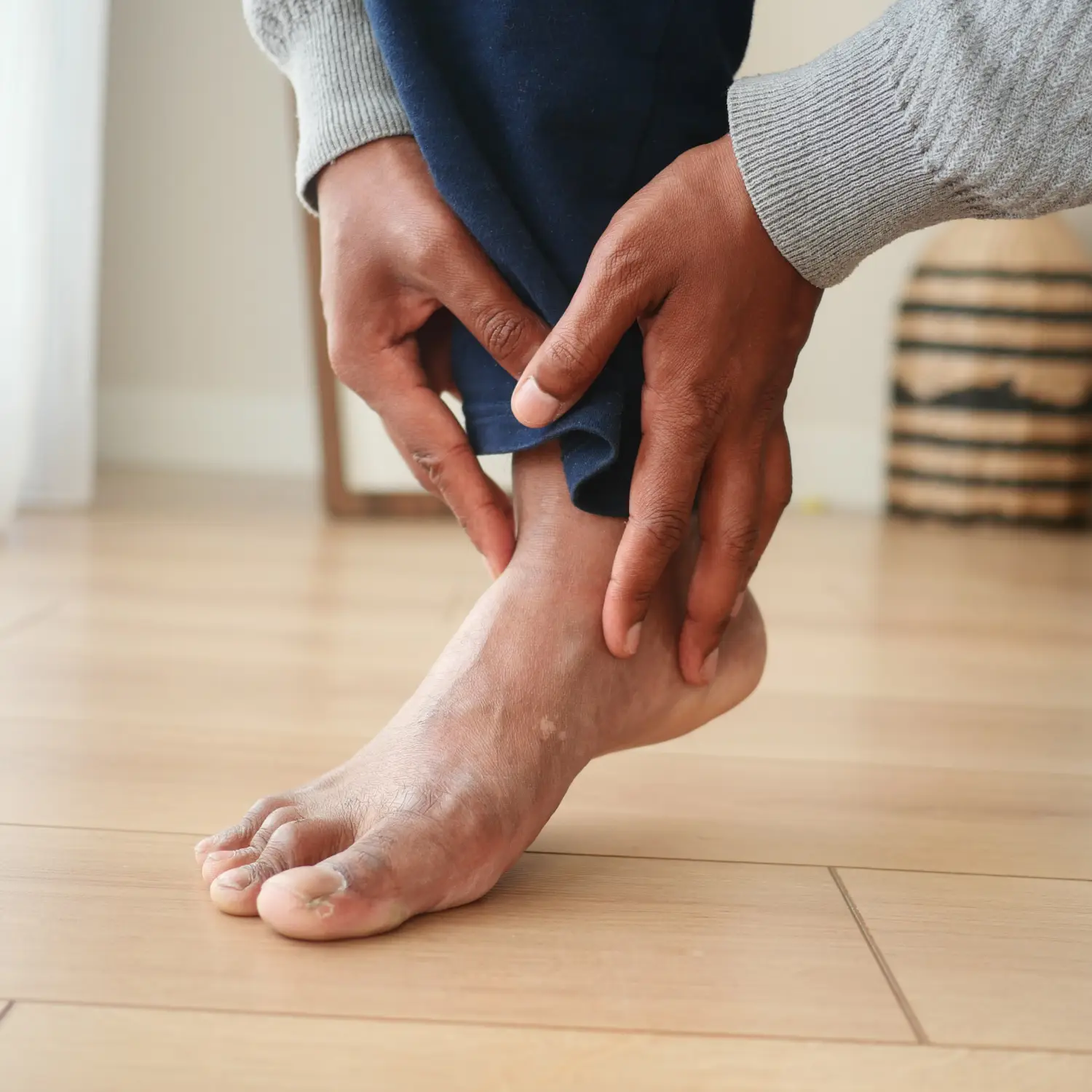
Symptoms vary from person to person. Tick anything that applies to you. The more that apply, or the longer they have been present, the more useful a proper assessment becomes.
If three or more of these sound familiar, it is worth getting assessed sooner rather than later. Early treatment can protect the joint surface and may reduce the risk of further damage.
Treatment Pathway
Most people with an unstable ankle start with non-surgical care, and many need nothing more. The right plan depends on how loose the ankle is, what you have already tried, and your activity level. The aim is to use the least invasive approach that gives you a steady, reliable ankle.

For many people, a structured non-surgical plan settles symptoms well. Physiotherapy is the foundation. Balance and strengthening exercises retrain the muscles and proprioception that keep the ankle steady, and good evidence supports this approach for chronic instability2. A brace or supportive footwear can add stability while you build strength. Your consultant may also suggest activity changes and, where helpful, links to other foot and ankle treatments.
Physiotherapy with balance and proprioception training
Strengthening exercises for the muscles around the ankle
Ankle bracing or taping for support during activity
Footwear and activity advice

If your ankle still gives way after a fair trial of physiotherapy, usually around three months, your consultant will reassess. An MRI scan can show the state of the ligaments and check the joint surface for any linked damage. This helps decide whether surgery is likely to help.

Surgery is considered when the ankle remains unstable despite good non-surgical care. The goal is to restore the ligaments so the joint stays steady. Your consultant will explain which approach suits your ankle, your activity demands, and your scan findings.
Arthroscopic (keyhole) assessment to check the joint and treat any related damage
Modified Broström repair, tightening and reattaching the existing ligaments
Ligament reconstruction with a graft, used when the tissue is too weak to repair

LMS, PhD. Consultant Trauma and Orthopaedic Surgeon. Foot and Ankle.
Consultant at The Royal London
Board member, GRECMIP
Honorary Senior Lecturer
Mr Malagelada is a fellowship-trained Consultant Trauma and Orthopaedic Surgeon who treats foot and ankle conditions exclusively. He trained in Spain and the UK at The Royal National Orthopaedic Hospital and The Royal London, and holds a BOFAS-accredited Foot and Ankle fellowship (Windsor). He has practised as a consultant at The Royal London Hospital since 2017, where he also teaches on the MSc in Orthopaedic Trauma Sciences at Queen Mary University of London.

Testimonials
Real patients. Real outcomes. Verified independently on Doctify.
A repeatedly giving-way ankle is often caused by chronic ankle instability. This usually follows one or more sprains that have left the outer ankle ligaments stretched or weak. The muscles and balance control around the ankle can also be affected. A consultant can examine the ankle and arrange a scan to find the cause.
Not always. Many people improve with physiotherapy, balance training, and bracing and never need an operation. Surgery is usually considered only when the ankle keeps giving way despite a fair trial of non-surgical care. Your consultant will assess your ankle and explain your options.
A modified Bröström repair is a common operation for lateral ankle instability. The surgeon tightens and reattaches the existing outer ankle ligaments to restore stability. It is often supported by keyhole techniques. Most people report good stability and satisfaction afterwards.
Recovery varies by person and procedure. Many people spend a few weeks in a boot, then start physiotherapy from around six weeks. A return to sport is often possible between three and six months. Your consultant and physiotherapist will guide your own timeline.
It can. Repeated giving way and further sprains may stretch the ligaments more over time. Ongoing instability can also place an uneven load on the joint surface. Getting assessed early gives you more treatment options and may help protect the joint.
No. You can book a private consultation directly, without a referral from a General Practitioner (GP). Appointments are often available at short notice across the London clinics. If you have private medical insurance, most assessments and treatments are usually covered.
Still have questions?
Send your enquiry through, and a member of Mr Malagelada's team will reply within one working day.